

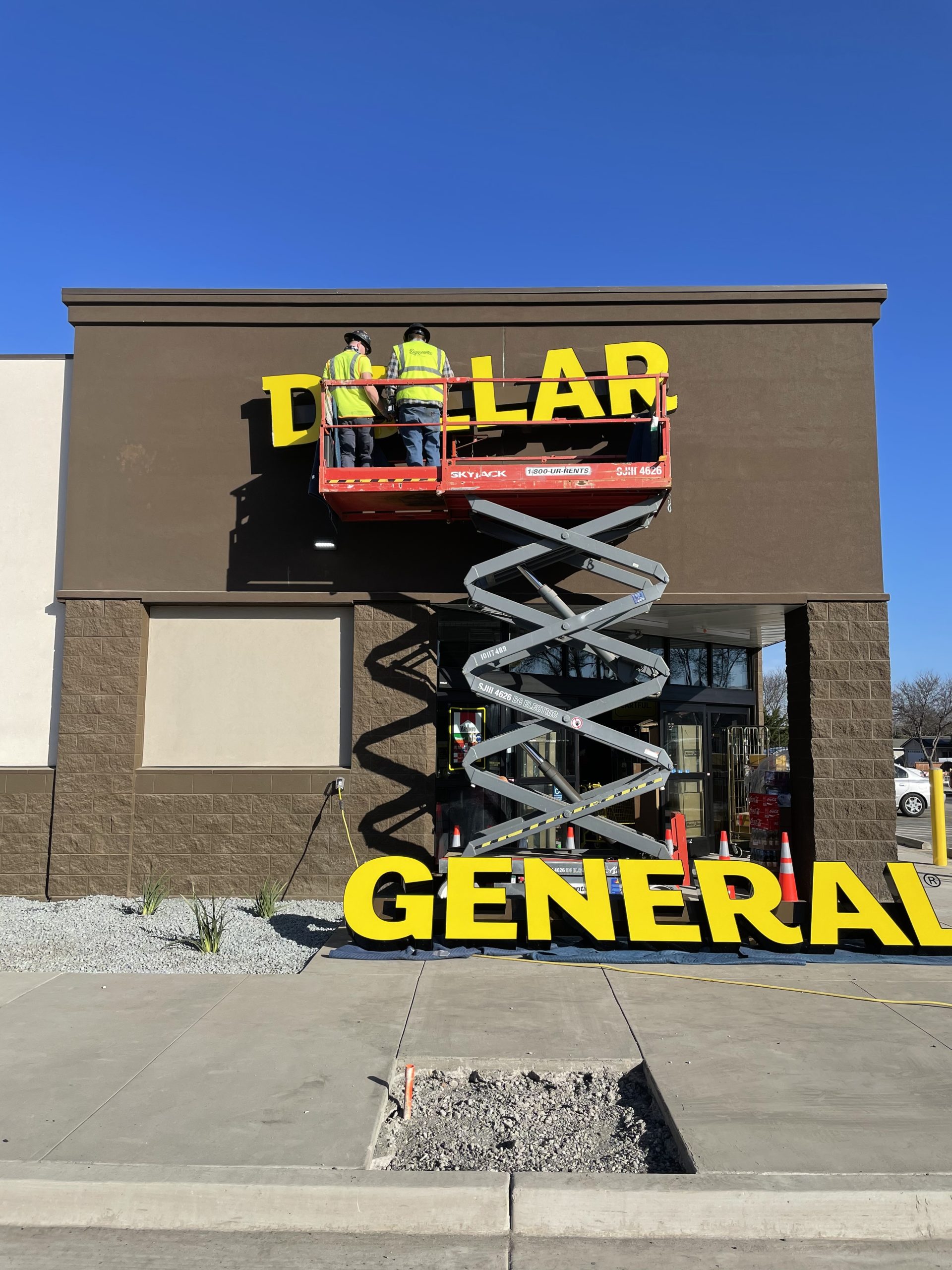
You’ve designed the perfect sign, got your quote, and you’re ready to go. Then someone mentions you need a permit. Here’s the thing most new business owners forget until it’s too late: your sign has a longer lead time than almost anything else in your buildout.
We’ve watched it happen hundreds of times over 33 years. Three weeks before the grand opening, someone calls us in a panic because they just realized they have no sign, no permit, and no idea how long the process takes. Here’s the new business signage checklist that keeps you from being that person.
Read Your Lease Before You Call a Sign Company
Your lease agreement almost certainly has a signage clause. It may dictate where your sign can go, how large it can be, what materials are allowed, and whether the landlord has approval rights over the design. Multi-tenant properties on the Monterey Peninsula often have a Master Sign Program that controls everything down to the font style.
Know these answers before you start designing:
- Does the lease specify an allowable sign area or location?
- Does the landlord or property management company need to approve the design?
- Is there a Master Sign Program or architectural committee?
- Who pays for the sign — you or the landlord? Who pays for installation? Removal when you leave?
- Are there restrictions on illumination, materials, or colors?
Get this wrong and you’ll design a sign you can’t install, or install one you’ll be asked to take down.

The Timeline Is Longer Than You Think
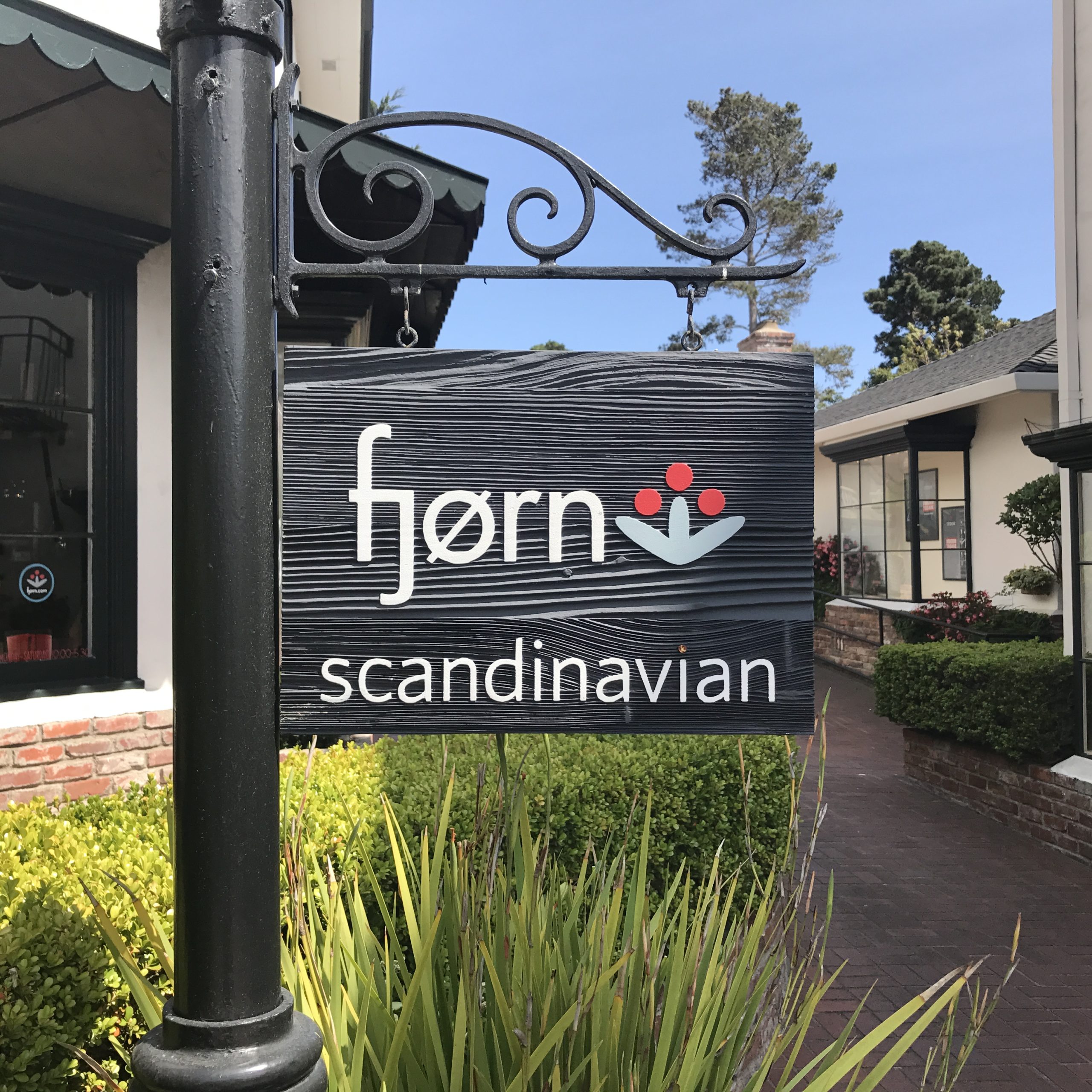
A typical commercial tenant sign on the Monterey Peninsula — from first conversation to installation — takes four to eight weeks. Sometimes longer.
Here’s why:
Design and revisions: 1–2 weeks. You need a design that works for you, your landlord, and the city.
Landlord approval: A few days to a few weeks, depending on how many people need to sign off.
Permitting: 2–4 weeks minimum in most Monterey County jurisdictions. Carmel and Pacific Grove can take longer if design review is involved.
Fabrication: 1–3 weeks depending on the sign type. Channel letters take longer than vinyl. Dimensional letters take longer than flat cut.
Installation scheduling: Another few days to a week, weather permitting.
These steps are mostly sequential. You can’t fabricate before the permit is issued. You can’t permit before the landlord approves. That’s why starting early matters.
The Permit Question
Almost every exterior sign in Monterey County requires a permit. Interior signs and temporary banners sometimes don’t — but your primary business identification sign almost certainly does. The process involves submitting drawings, a site plan, and sometimes structural calculations to the local planning or building department.
If your space is in a city with design review — Carmel, Pacific Grove, parts of Monterey — the timeline can stretch to months. We handle sign permitting for our clients, but you need to factor that time into your buildout schedule.
ADA Signage Is Not Optional
This is the one almost every new business owner misses. California requires ADA-compliant signage in your space before you open. Restrooms, room numbers, exits, stairwells — all need tactile signs with raised characters and Grade 2 Braille.
California’s Unruh Civil Rights Act carries a minimum of $4,000 per violation per visit. A complete set of ADA interior signs runs $500 to $2,000. The math is not complicated.
Get your ADA signs ordered at the same time as your exterior sign. Not after you open. Not when you get around to it. Before you open.
Temporary Signage Can Bridge the Gap
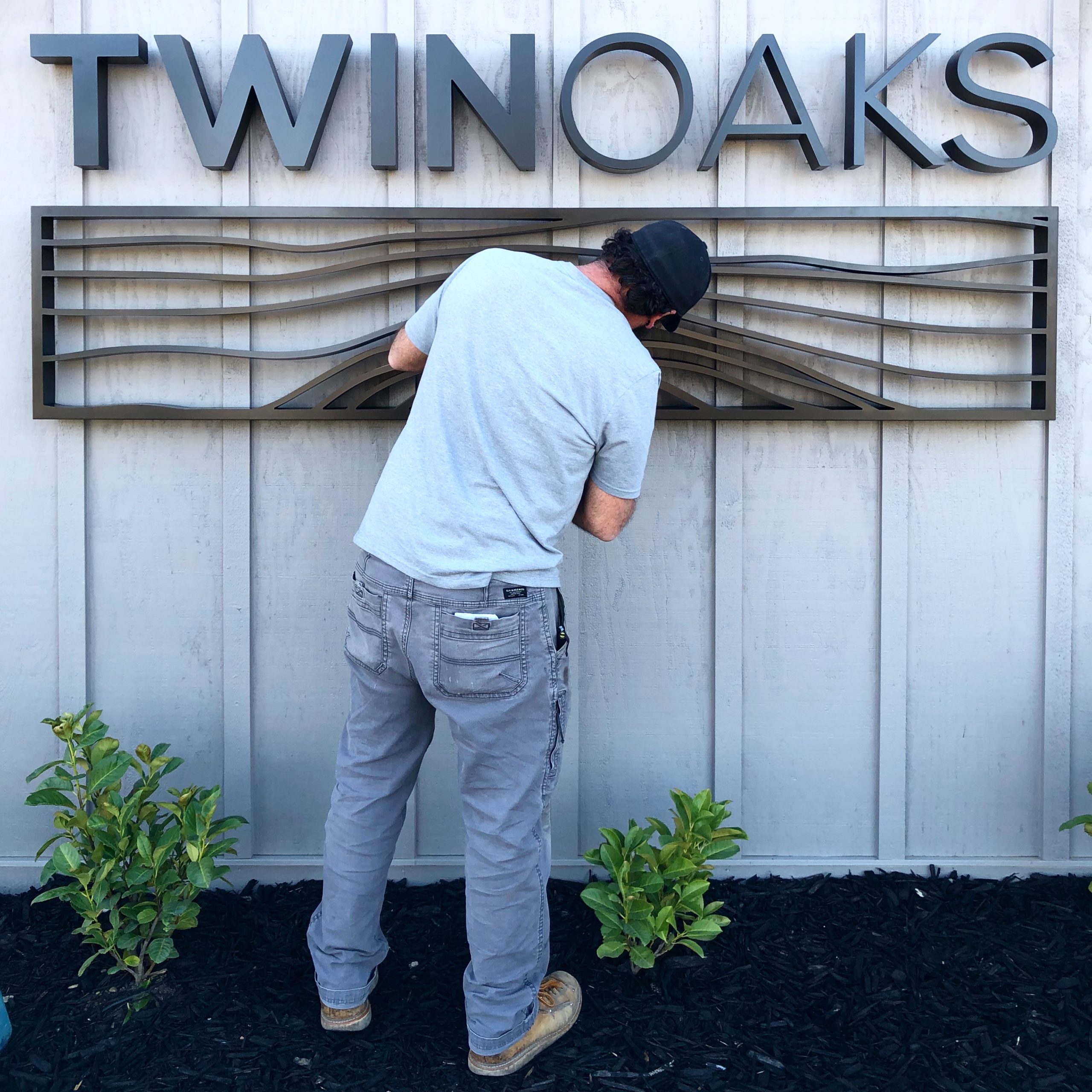
If your timeline is tight and your permanent sign won’t be ready by opening day, temporary signage keeps you visible while you wait. A professional vinyl banner or window graphics can go up in days, not weeks, and they don’t require a permit in most jurisdictions.
The key word is “professional.” A handwritten poster taped to the door tells customers you’re not ready. A clean vinyl banner with your name and hours tells them you’re open for business while the permanent sign is in production.
Start the Conversation During Lease Negotiation
The best time to talk to a sign company is while you’re still negotiating the lease — not after you’ve signed it. We can review the signage clause, tell you what’s realistic for the building, flag any Master Sign Program restrictions, and give you a budget number before you commit.

That one conversation up front can save you weeks of delays and thousands of dollars in surprises.
If you’re moving into a new space on the Monterey Peninsula and want to make sure your signage is part of the plan from day one, give us a call.

Leave A Comment